Best VPN Protocols in 2026: Which One Actually Works?
A complete breakdown of VPN protocols — from OpenVPN to VLESS Reality — and why some get blocked within seconds while others are invisible to DPI.
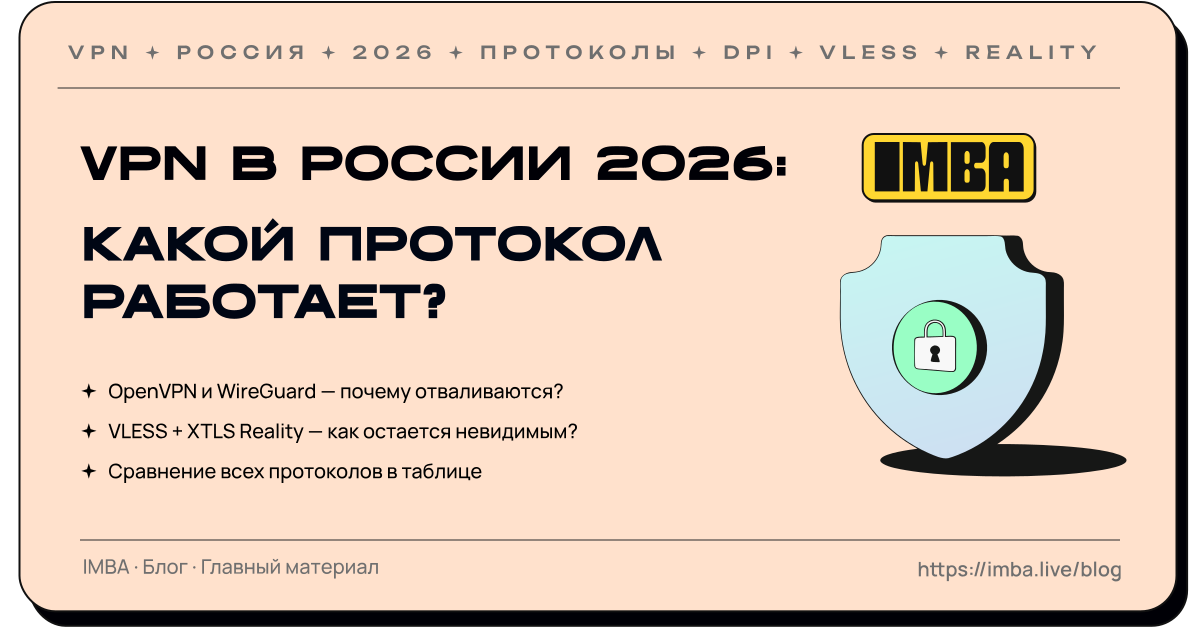
Why your VPN stopped working
Governments and ISPs in China, UAE, Turkey, Iran, and many other countries have deployed deep packet inspection (DPI) systems at the network level. These systems identify most VPN protocols by their traffic signatures and block them in real time.
Blocked or unstable:
- PPTP — outdated, blocked everywhere
- OpenVPN — easily identified by its distinctive handshake pattern
- WireGuard — works in less restricted regions, unstable in heavily censored networks
What still works:
- Shadowsocks — masks traffic as HTTPS, works in most cases
- V2Ray/VLESS — advanced obfuscation, very reliable
- VLESS + XTLS Reality — the gold standard for 2026
VLESS Reality — why it works
Reality is a protocol that makes VPN traffic indistinguishable from a regular HTTPS connection to a real website (like apple.com or microsoft.com). DPI sees what looks like "normal" TLS and doesn't block it.
Here's how it works technically:
- Your client connects to the IMBA VPN server
- Traffic appears to be accessing a legitimate domain
- DPI finds no VPN signatures — request passes through
Countries with aggressive DPI
| Country / Region | DPI Level | Recommendation |
|---|---|---|
| China (Great Firewall) | Very aggressive | VLESS Reality required |
| UAE | Aggressive | VLESS Reality required |
| Turkey | Moderate to aggressive | Obfuscation needed |
| Iran | Very aggressive | VLESS Reality required |
| Russia | Moderate to aggressive | VLESS Reality recommended |
Protocol comparison table
| Protocol | DPI visibility | Speed | Works in censored networks |
|---|---|---|---|
| VLESS + XTLS Reality | No | High | Yes, reliably |
| Shadowsocks | Partial | High | Sometimes |
| WireGuard | Yes | High | Blocked in most restricted networks |
| OpenVPN | Yes | Medium | Blocked |
| PPTP | Yes | Low | Blocked |
Conclusion
If you're in a country with internet censorship and want a reliable VPN, you need a protocol with proper obfuscation. IMBA VPN uses VLESS Reality, which is currently the most censorship-resistant protocol available.
[Try IMBA free for 7 days](/auth/register)